
The world needs a reset and to restart well intentioned cooperation projects from start. Because right now the UN and EU projects look like software built on code from the 80s, rickety, patched, slow to adapt, and prone to crashing under the weight of outdated assumptions.
The post The US leaves 66 United Nations organizations to “put America first” appeared first on Green Prophet.
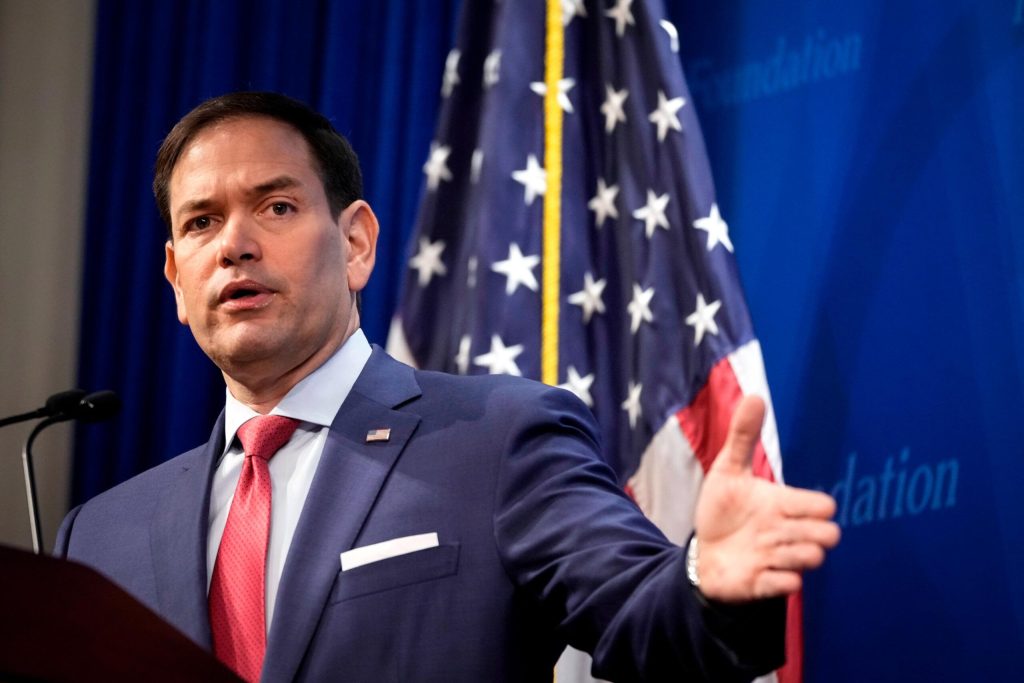
Marco Rubio: “I don’t care what the UN says.”
The United States has announced it is withdrawing from 66 international organizations, many of them linked directly or indirectly to the United Nations system. The decision, announced by President Donald Trump and reinforced by Secretary of State Marco Rubio, reflects a renewed “America First” approach to foreign policy and multilateral engagement. The full list of cut funding is here. Given the pro-terror stance for organizations funded by the UN Green Prophet sympathizes with the US and understand that what appear as cleantech or environmental projects is money sent to support countries that are anti-environment, such as Qatar. Read our article on the Union for the Mediterranean.
“Today, President Trump announced the U.S. is leaving 66 anti-American, useless, or wasteful international organizations,” Rubio said. “These withdrawals keep a key promise President Trump made to Americans — we will stop subsidizing globalist bureaucrats who act against our interests. The Trump Administration will always put America and Americans first.” The administration added that its review of additional international organizations remains ongoing.
Although the full list has not yet been released, the move has immediate relevance for sustainability, climate policy, science, and culture, where the US has historically been one of the largest financial contributors. Several UN bodies central to environmental governance are widely expected to be affected, either through full withdrawal, funding cuts, or reduced engagement.
Among the most consequential is the United Nations Framework Convention on Climate Change, which oversees global climate negotiations including the annual COP summits. This year the COP31 event will be held in Antalya, Turkey. The US has already exited the Paris Agreement once under Trump and rejoined under President Biden; this announcement raises fresh uncertainty about America’s long-term role in global climate coordination.
The United Nations Environment Programme is another body closely tied to sustainability. UNEP coordinates international research, policy guidance, and monitoring on biodiversity loss, pollution, and climate adaptation. Critics in Washington argue that UNEP promotes regulatory frameworks that conflict with US economic and energy interests, while supporters say it provides essential scientific coordination that no single country can replicate alone.
Cultural and scientific organizations are also in focus. The UN’s UNESCO, which works on education, heritage protection, and science cooperation, has long been criticized by US conservatives for what they see as politicization and perceived institutional bias, particularly in resolutions related to Israel and the Middle East.
Sustainability advocates note that UNESCO’s work on water resources, ocean science, and heritage conservation often intersects directly with environmental protection. This is true, but the UN funds organizations that seem harmless, but which take a very clear political point of view that contradicts American policies and allies.
Other bodies potentially affected include the Food and Agriculture Organization, which addresses food security and sustainable farming, and the World Health Organization, whose work increasingly links environmental degradation, pollution, and climate change to public health outcomes.
Related: The UN and EU fund anti-west biases in Spain
The administration and its supporters argue that many UN and EU-aligned institutions have developed ideological and structural biases that reflect European policy preferences more than American priorities. In the EU and UN funded Union for the Mediterranean (UfM), the organization operates like a pan-Arab support network instead of servicing actual countries in the Mediterranean. These critiques often point to heavy emphasis on precautionary regulation, climate mandates, and social frameworks that are seen as misaligned with US energy production, industrial competitiveness, and national sovereignty.
On the other hand, critics warn that disengagement from UN sustainability institutions risks reducing US influence over global standards that will shape markets, trade, and technology regardless of American participation.
For sustainability advocates, the moment highlights a deeper tension: whether environmental governance is best pursued through global institutions or through national and regional strategies. I personally believe that more power should be put into the hands of local organizations. The bigger and more bloated EU and UN organizations become (with non-elected leaders), the more political biases and racism creep into global policies and perception. The world needs a reset and to restart well intentioned cooperation projects from start. Because right now the UN and EU projects look like software built on code from the 80s, rickety, patched, slow to adapt, and prone to crashing under the weight of outdated assumptions.
Karin Kloosterman – Green Prophet
The post The US leaves 66 United Nations organizations to “put America first” appeared first on Green Prophet.